No watering down of local content on Australian naval projects
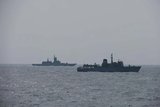
Anzac-class frigates are among the Royal Australian Navy vessels to feature the 9LV combat management system.
Although concerns linger about the construction schedule for Attack-class submarines, Australian government demands for greater local industrial content in naval programmes continue with the rollout of a Saab Australia combat management system.


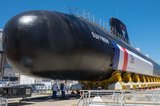
Concern remains high about the Attack-class submarine programme for the Royal Australian Navy (RAN). Despite assurances from the government and designer Naval Group, Shephard remains sceptical that the construction of 12 submarines will proceed as smoothly as the two sides claim, with the project’s estimated price already having risen to A$90 billion ($70 billion).
Nonetheless, Canberra announced on 23 March that it had inserted a commitment into the 2019 Strategic Partnering Agreement (SPA) that would ensure a minimum of 60% of the price of Project Sea 1000 is spent locally over the lifetime of the programme.
Should the French company
Our news & analysis is now part of Defence Insight®
A Basic-level or higher Defence Insight subscription is now required to view this content.


More from Naval Warfare
-
![Latest Russian subsea standoff puts pressure on the UK’s seabed defence strategy]()
Latest Russian subsea standoff puts pressure on the UK’s seabed defence strategy
UK defence secretary John Healey’s exposure of a covert Russian deep-sea operation against undersea infrastructure in the Atlantic validates the Royal Navy’s Atlantic Bastion concept but lays bare a capacity gap that autonomous systems, allied integration and sustained investment must close.
-
![US Navy bets on radio frequency to increase vessel protection against aerial threats]()
US Navy bets on radio frequency to increase vessel protection against aerial threats
A Northrop Grumman RF-based defensive capability will equip USN destroyers and aircraft carriers to enhance their survivability against missile and drone attacks.
-
![Naval Group’s Barracuda bid could deepen Franco-Greek naval alignment]()
Naval Group’s Barracuda bid could deepen Franco-Greek naval alignment
As the Hellenic Navy looks to replace its ageing submarines with a next-generation fleet, other likely contenders for the programme include TKMS, Saab, Fincantieri, Navantia and Hanwha Ocean.